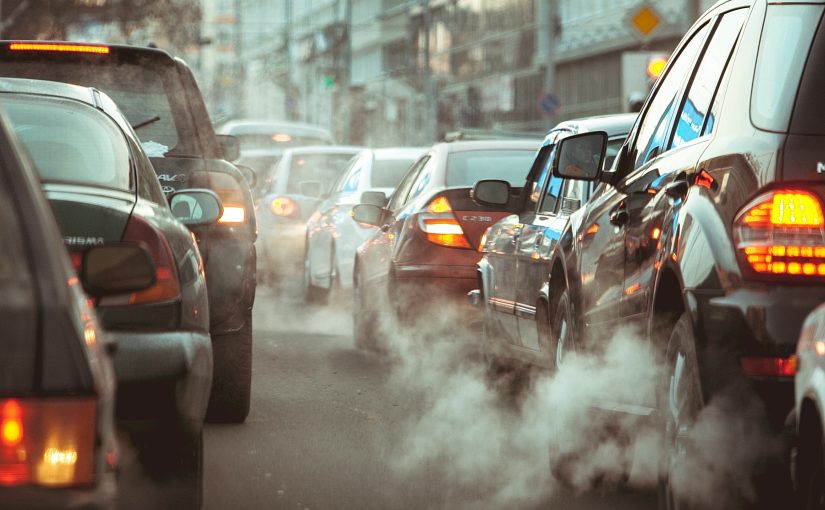
It’s common to think about air in your home environment, with air purifiers, ventilation systems, de/humidifiers, etc. being quite popular, but the air in your car is also worth considering, especially if the vehicle is powered by burning fuel.
The World Health Organization states:
Household air pollution was responsible for an estimated 3.2 million deaths per year in 2020, including over 237 000 deaths of children under the age of 5.1
While a study on air quality inside cars specifically found:
VOC concentrations often exceeded levels typically found in residential indoor air2
Of particular concern were high levels of benzene, which according to the CDC, causes cancer in humans including leukemia, as well as anemia, immune dysfunction, bone and bone marrow problems, low birth weight and fertility problems3
In a 2014 study, researchers measured the breath of 42 adults during and after a 2-hour commute, and found measureable changes in biomarkers, indicating pulmonary and systemic inflammation and oxidative stress, as well as reductions in heart-rate variability, indicative of autonomic dysfunction.4
Air quality inside cars is negatively impacted from various sources:
- The car’s own exhaust fumes (PM2.5, CO, NOₓ, SO2)
- The exhaust fumes of other vehicles (PM2.5, CO, NOₓ, SO2)
- The outside air (PM2.5)
- The breath of the driver and passengers (CO2)
- Offgassing of the interior components in the car (benzene, formaldehyde)
Let’s briefly look at each of these points, before we figure out how we can improve our exposure to each of them.
Car self-pollution
A study from 2017 titled “Is in-cabin exposure to carbon monoxide and fine particulate matter amplified by the vehicle’s self-pollution potential?” found that:
Vehicle self-pollution contributed to 15 and 30% of CO and PM2.5 in-cabin exposure.5
This can be interpreted as good news, because your own car is the thing that is the most directly under your control, so the fact that it contributes to so much of your exposure means that your choices can have a big positive impact on your health and that of your passengers.
Pollution from other cars
We are usually not the only car on the road, and especially during commutes we can be one among many. Most ICE (Internal Combustion Engine) vehicles are almost designed to deliver pollution to each other – exhaust pipes are positioned to direct their fumes towards the cabin of the car behind them, with the cabin fan further guiding it inside.
A 2017 study showed that:
[…] the time spent travelling behind a bus was statistically significant for PM2.5, lung-deposited SA, and CO.6
Outside air
Outside air quality is unpredictable, with extremes in certain areas. In general you can rely on carbon dioxide being lower outside than inside, and PM2.5 being higher, especially in Winter because of wood smoke. This can affect which strategies you use to get clean air in the car at which times of year.
Breath of passengers
This might seem silly at first, but just like inside the house, our breath is usually the main source of CO2 indoors. In a car, the impact of our breath is even bigger because there is less air to dilute it, and we reduce the amount of oxygen at the same time.
This 2018 study by Barnes et al found that
96% of vehicles exceeded the recommended CO2 level of 1000 ppmv
during driving, with a mean value of 3,413 ppmv.7
A 2023 systematic review and meta-analysis confirms the 1000ppm maximum for both adults and school-aged children, stating:
The complex task performance declined significantly when exposed to additional CO2 concentrations of 1000–1500 ppm.
and
The meta-analyses provide new evidence to support the recommendation for a stricter occupational exposure concentration limit of less than 1000 ppm in workplaces that require high cognitive demands.8
Offgassing of interior components
In a study titled “Analyses on influencing factors of airborne VOCS pollution in taxi cabins”, it was found that car cabins can have high levels of VOCs, and as with other products, the levels are higher for newer cars.
Due to the long time in vehicular cabins, people have high exposure to the airborne volatile organic compounds (VOCS), which will lead to negative effects on human health.9
As I wrote in my article The Risks of Paint10, VOCs cause a range of negative health outcomes, including:
- Eye, nose and throat irritation
- Headaches, loss of coordination and nausea
- Damage to liver, kidney and central nervous system
- Cancer in humans
What can you do about it?
Prevention
The best way to reduce your exposure to all of those pollutants in the car is to spend less time in vehicles.
Some pollutants like VOCs are highest when you first get into the car, especially in warmer months and weather which causes the internal components to release the VOCs11. So even if you are not doing long drives, short drives can still be harmful.
Consider making lifestyle changes to reduce driving. Here are some suggestions, which are highly dependent on your individual situation:
- Live closer to your workplace to reduce your commute
- Work from home
- Walk or bike/e-bike instead of doing short drives
These changes could have other profound benefits to your health, depending on how you spend the extra time. Low-intensity exercise like walking and low-to-moderate-pace biking is great for building your aerobic base, mitochondrial density, and increasing VO2 max12, while sitting itself is linked to metabolic syndrome, heart disease and cancer13.
Driving can also contribute to chronic stress, which has many well-established health problems, as seen in a 2018 systematic review:
Overall, these studies provided moderate evidence to suggest that driving for long hours elicits a stress response over an extended period of time.14
Reduce vehicle pollution
The single most effective way within your control to improve the air inside your car is to drive a car that does not directly pollute the air.
The topic of EVs has become a political issue with strong emotions being triggered in some people, but regardless of our beliefs about the broader context, when you focus on the health of the people inside and immediately outside of cars when they are driven, it is obviously far better to have no emissions than emissions.
Even if your vehicle is charging with electricity that was generated with pollution, it is still a win for human health, because power plants are typically built in industrial areas away from dense residential populations, so you are contributing to the air being more clean in the areas where people live and spend the most time.
That one change can reduce the amount of carbon monoxide, nitrogen dioxide, and PM2.5 by up to 30%15 as well as contributing to a kind of “herd immunity” for the other vehicles around you, helping improve their air quality and even removing the pollution they are emitting if you are running your air conditioning with filtration.
Filtration
Even if you have reduced your vehicle use, you will likely still need to use it sometimes, and even if you have an emissions-free car there is still the other 70-85% of cabin pollution from other cars that you haven’t yet dealt with.
Activated carbon (or similar gas phase media) is important for trapping gases that are emitted from ICE vehicles, like nitrogen dioxide (NO2) and sulfur dioxide (SO2), while HEPA will trap particulate matter.
Some cars have HEPA or HEPA-like filters, or the ability to insert one, often behind the glove compartment.
In general, burning diesel produces more NOx and PM2.5 than burning petrol/gas, so if you drive a diesel vehicle, using a filter with an activated carbon component is more important for you.16
It is important to change any filters over time. When they are fresh, they trap the harmful pollutants, but if they get full they can become a source of pollutants themselves, as well as toxic moulds. This is true for the filters that come with the car as well as any you add yourself17.
Air purifiers for cars
What I looked for in these air purifiers is a high CADR (Clean Air Delivery Rate), the ability to remove PM (particulate matter) and harmful gas from the air, and a lack of ozone generation/ionizer because that can cause lung inflammation and increase rates of respiratory infection18.
| Purifier name and link | CADR | Removes PM2.5 | Removes gas | Ozone/ionizer |
|---|---|---|---|---|
| Smart Air QT3 | 37m3/h | Yes | No | No |
| Westinghouse 1804 | 24m3/h | Yes | Yes | Yes |
| IQAir Atem Car | 66m3/h | Yes | Yes | No |
| Luftrum C401 | 28.1m3/h | Yes | Yes | No |
| Kronos Car Air Purifier | 14.8m3/h | Yes | No | Yes |
| Medify Air MA-CAR | 20m3/h | Yes | Yes | Yes |
| Philips GoPure 5212 | 16m3/h | Yes | Yes | No |
In the table above, I put the good values in bold to indicate which ones I rated the best. As you can see, there are 2 standouts, so I have also bolded their names – IQAir Atem Car and Luftrum C401.
Based on these stats, the IQAir Atem Car is the clear winner with over 2x the CADR of any other product. Unfortunately that is reflected in the price, and they don’t ship it to my country even if I wanted to spend that much, so I went with the Luftrum C401 which I have strapped to the back of my driver’s seat.
It is configured to run in auto mode, which means it runs very gently until it detects PM2.5 and then it will increase its fan speed until it has filtered the particles. I can confirm it does go into higher modes at the right times, like when I am behind a bus or in an area with chimney smoke.
Ensure fresh air is coming in
If you made the changes so far, you now have much less PM2.5 entering your lungs and have reduced VOCs, but there is still the problem of CO2 to deal with.
Just like in our homes, there isn’t a practical way to either filter, absorb, adsorb or scrub CO2, or convert it with plants. There is just so much of it in the air and plants don’t convert it quickly or consistently enough to make much difference.
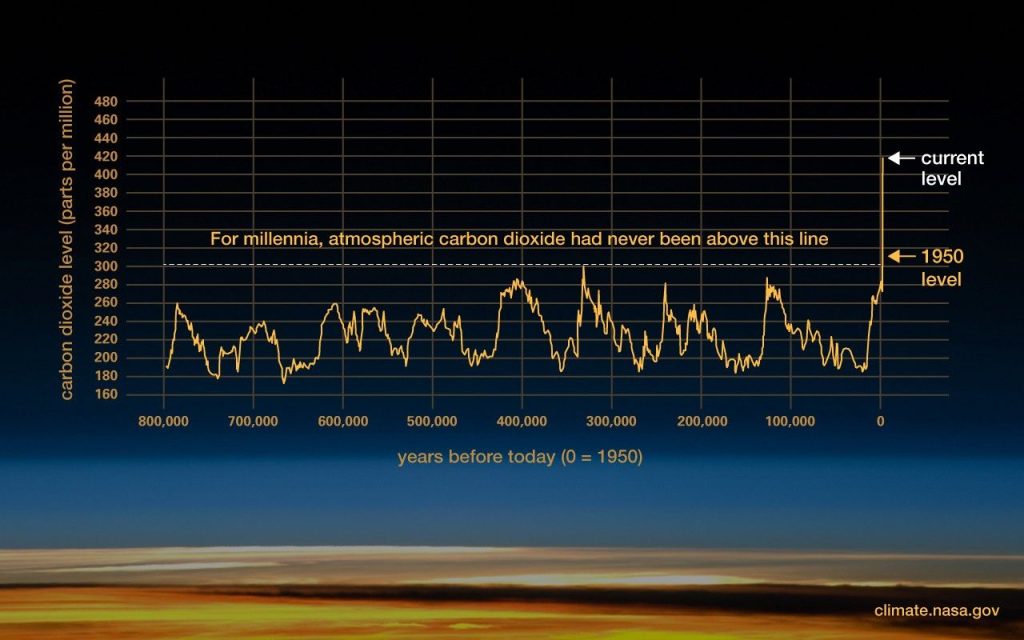
Ambient levels of CO2 are generally low at around 420ppm, making it the easiest thing to improve; you simply need to bring outside air into the cabin. The levels used to be lower, with pre-industrial CO2 levels at around 280ppm, so if the trend continues we may not be able to continue the “bring in fresh air” strategy, but for now it still works.
The strategy I use for this – and for the offgassed VOCs that accumulated from the plastics and glues while I wasn’t in the car – is to open all the windows when I get in. I keep them down for the first minute or so which clears it out, and I leave the car intake fan on at all times which brings new fresh air into the cabin to keep the CO2 levels low during the ride. For this strategy, it’s important to disable fan recirculation in the car – which is usually an icon of a car with an arrow inside it – otherwise the CO2 will just accumulate again19.
Conclusion
Did I leave anything out? Have you found any of the suggestions or information helpful? Let me know in the comments, and subscribe to my newsletter if you want to be notified when I publish more.
- https://www.who.int/news-room/fact-sheets/detail/household-air-pollution-and-health ↩︎
- https://www.sciencedirect.com/science/article/abs/pii/S0160412009001779 ↩︎
- https://www.cdc.gov/chemical-emergencies/chemical-fact-sheets/benzene.html ↩︎
- https://www.sciencedirect.com/science/article/abs/pii/S001393511400156X?via%3Dihub ↩︎
- https://www.sciencedirect.com/science/article/abs/pii/S1361920917300238?via%3Dihub ↩︎
- https://www.sciencedirect.com/science/article/abs/pii/S1352231017304570?via%3Dihub ↩︎
- https://pmc.ncbi.nlm.nih.gov/articles/PMC5923653/ ↩︎
- https://www.sciencedirect.com/science/article/pii/S036013232300358X ↩︎
- https://link.springer.com/article/10.1007/s11356-014-3223-y ↩︎
- https://klaustownsend.com/the-risks-of-paint/ ↩︎
- https://pubmed.ncbi.nlm.nih.gov/24972656/ ↩︎
- https://www.youtube.com/watch?v=Tj5t3aVrhSo ↩︎
- https://www.mayoclinic.org/healthy-lifestyle/adult-health/expert-answers/sitting/faq-20058005 ↩︎
- https://pmc.ncbi.nlm.nih.gov/articles/PMC5642886/ ↩︎
- https://www.sciencedirect.com/science/article/abs/pii/S1361920917300238?via%3Dihub ↩︎
- https://theicct.org/stack/vehicle-nox-emissions-the-basics/ ↩︎
- https://pmc.ncbi.nlm.nih.gov/articles/PMC10611836/ ↩︎
- https://www.healthline.com/health/what-does-an-ionizer-do#drawbacks ↩︎
- https://pubmed.ncbi.nlm.nih.gov/27960651/ ↩︎