
In the CALERIE (Comprehensive Assessment of the Long-term Effects of Reducing Intake of Energy) trial, researchers from the National Institute on Aging recruited 220 non-obese people to do an average of 11.7% calorie restriction for 24 months, which means someone who eats 2,500 calories per day would eat around 2,200 calories1.
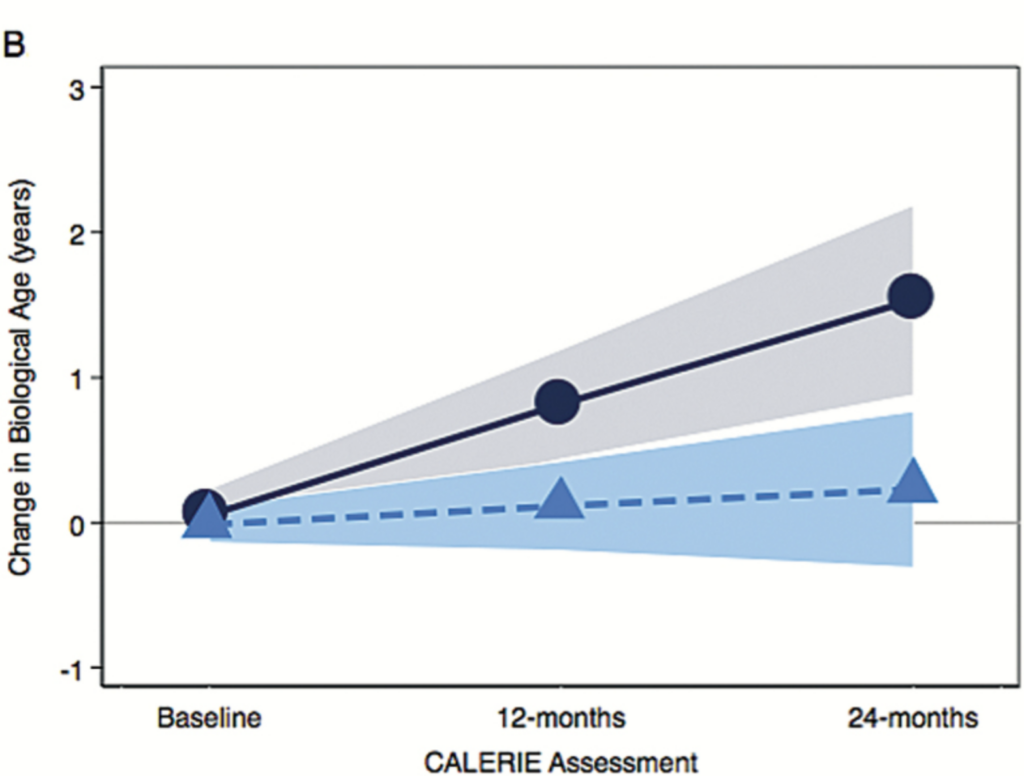
As you can see, after 12 months, they saw striking results.
After 12 and 24 months, not only did the average biological age of the calorie-restricted group barely increase, there wasn’t even any overlap between the biggest age increase in the restricted group, and the smallest age increase in the control group, and that gap got larger as time went on.
Many people even saw their biological ages go backwards.
That wasn’t all they noticed. They also saw improvements in mood, working memory, quality of life, inflammation, immune function, blood biomarkers, and more, as shown in this graphic:
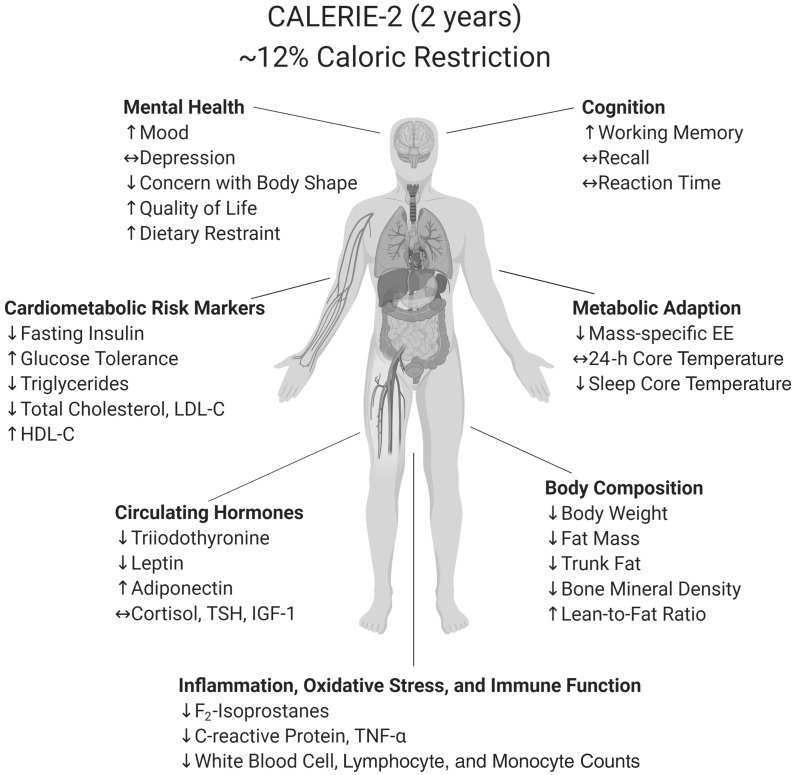
Calorie restriction has been the gold standard for life extension for decades, and studies like this show that it doesn’t just make you live longer, it also makes your life better.
There are over `115 publications so far related to this trial, with the last one published only a few months ago. A maintained list is available on their website2.