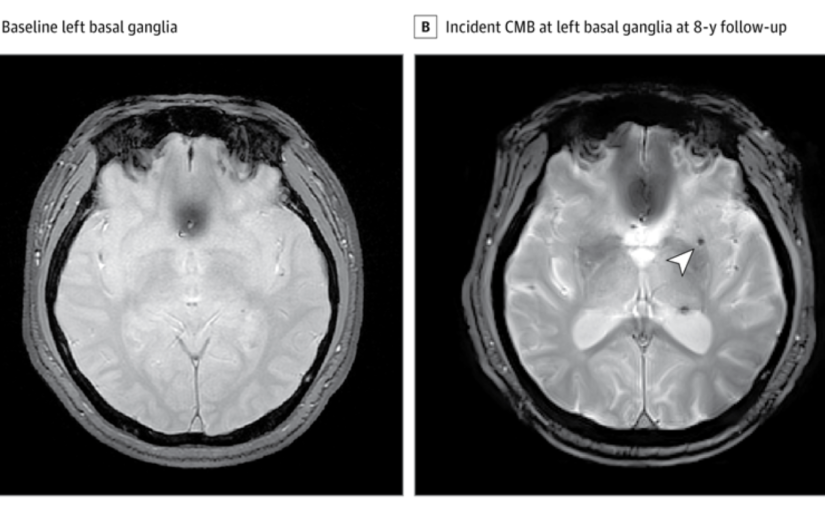
In this 2025 study, moderate to severe obstructive sleep apnea had over 2x greater risk of cerebral microbleeding, which is associated with dementia and stroke.
Several other studies and meta-analyses support these findings:
- Cerebral Microbleeds on MRI in Patients with Obstructive Sleep Apnea
- Obstructive sleep apnea is associated with markers of cerebral small vessel disease in a dose-response manner: A systematic review and meta-analysis
- Recurrent stroke risk and cerebral microbleed burden in ischemic stroke and TIA: A meta-analysis
If you haven’t been tested for sleep apnea before, I think it’s a good idea. People don’t always know they have it, and it’s often fairly easy to resolve.
Modern consumer wearables are getting better at detecting severe obstructive sleep apnea, but they lag behind professional-grade devices for detecting moderate OSA1, which is still associated with these microbleeds.
Apple Watches have been shown to only have 50.5% sensitivity to sleep stages, with wild inaccuracy at detecting both light and deep sleep.
Fitbit wasn’t great either, albeit better than Apple, and Oura rings did pretty well2, but your best bet is still to engage with a sleep specialist.