In this roundup, we cover research on the benefits of cordyceps, flavonoid diversity, casein and probiotics, the risks of AI summaries, long COVID, titanium dioxide, erythritol, and the link between cardiovascular health and dementia.
Cordyceps improves gains from exercise
In a recent randomized, double-blind, placebo-controlled study1, supplementation with a blend of cordyceps, reishi, king trumpet, shiitake, lion’s mane, and turkey tail mushrooms resulted in significant improvements in VO2max, ventilatory threshold, and time to exhaustion.
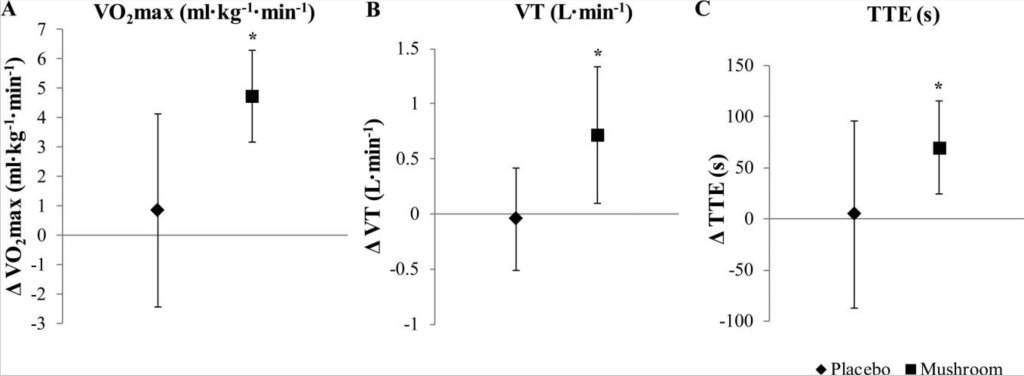
There have been other studies finding similar effects, and a small number finding no significant effects, but those ones seem to have lower-quality design, so this is a solid addition to the body of evidence.
Accuracy of popular AI models is getting worse over time
A study looked at 10 prominent LLMs, including ChatGPT, DeepSeek, and Claude, getting them to summarize nearly 5,000 scientific papers.
They found that even with explicit prompting and multiple tests, the summaries were nearly 5 times more likely to contain broad generalizations than the original, human-written summaries, and newer versions of models are worse at it than older ones2.
This topic interests me for many reasons, and it is one of the main reasons I started this website, so I have a few things to say.
Broad generalizations have been a problem in science reporting for a long time. To put it simply, it’s because many people actually prefer it; if you are a reporter, science communicator, politician, or AI, and you say (for a completely contrived example):
Water causes cancer
you will get a lot more engagement than if you say:
One small study showed that water is correlated with a 5% increase in prostate cancer in sedentary, genetically-modified mice
and when you get more engagement, it incentivizes you to do it more.
For reporters, science communicators, and politicians, more engagement translates into more money, promotions and public support, and for AI products it means more users, which means higher stock value, investment, and more training data.
AI tools might be getting better at seeming or feeling like they are accurate, because they are great at using confident phrasing, and generalization itself communicates confidence, so this evidence is vital to let us know that the reality is the opposite.
Long COVID symptoms identified in infants and pre-school children
This study analyzed data on children under 5 from over 30 locations in the US and identified that 14-15% of the participants had probable Long COVID.
Participants with higher indices often had poorer overall health, lower quality of life, and perceived delays in developmental milestones.
They narrowed down 75 reported symptoms into 6 different symptoms shown here:
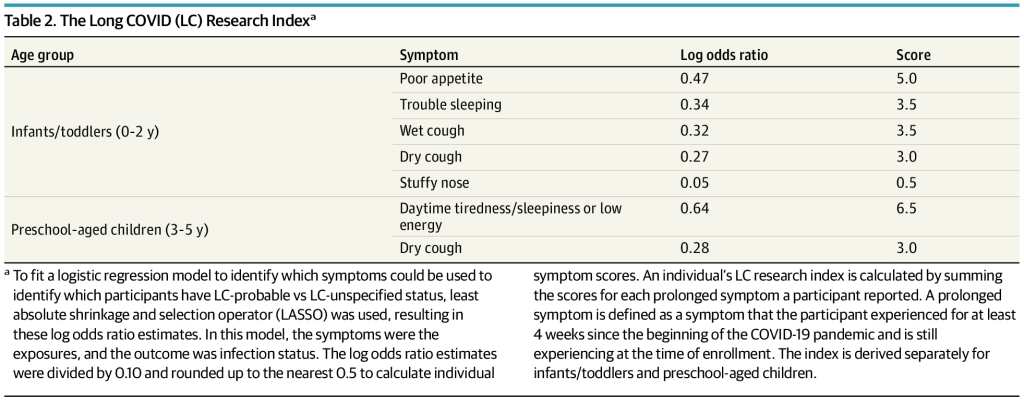
Infants and toddlers need to score 4.0+ to indicate Long COVID, compared to 3.0+ in the preschool group3.
Previous research hasn’t looked at this age range, and it’s such an important range in terms of development, so it’s great to shine a light on it.
Diversity of flavonoids reduce rates of all-cause mortality and chronic diseases
Participants who consumed the widest diversity of dietary flavonoids, flavonoid-rich foods and/or specific flavonoid subclasses had a 6–20% significantly lower risk of all-cause mortality and incidence of cardiovascular disease, type 2 diabetes, cancer, respiratory disease and neurodegenerative disease4.
Tea, berries, dark chocolate, apples, and oranges were some of the most common sources of flavonoids.
Good vascular health may reduce or delay dementia
Between 22-44% of dementia cases before age 80 were attributed to midlife vascular risk factors, in this study of 12,274 people over 33 years (the ARIC study)5.
Titanium dioxide may contribute to obesity and diabetes
The popular food additive titanium dioxide may be in up to 11,000 food products in the US, and this study on mice shows that it disrupts blood glucose, gut hormones, GLP-1 responses and endocrine cell differentiation6.
It has been banned in the EU since 2022 because it is likely to also be a neurotoxin, be an immunotoxin, cause intestinal lesions and potentially damage genes, but the FDA has maintained that it is safe7.
Erythritol increases inflammation in blood vessels
Erythritol causes multiple signs of cardiovascular dysfunction, as shown in this study in the Journal of Applied Physiology8. The Lifespan Research Institute also did a good summary9.
I wrote about this study before it was published, as well as erythritol being linked to oxidative stress, stroke, and cancer10, so it’s great to see the research in its final form.
At this point I am completely avoiding erythritol, which is a shame since it’s in some drinks I like.
Casein and probiotics before bed may improve anaerobic power, strength, and sports performance
In this randomized, double-blind, placebo-controlled study, male soccer players achieved a significant power, strength and anaerobic performance boost while taking casein and probiotics that was larger than the gain with either supplement on their own, with no effect on aerobic performance11.
They also had improved recovery after 24h and reported less DOMS after 72h.
The probiotics tested were:
| Strains | Dosage (CFU) |
|---|---|
| Lactiplantibacillus plantarum BP06 | 0.43 × 10¹¹ |
| Lacticaseibacillus casei BP07 | 0.65 × 10¹¹ |
| Lactobacillus acidophilus BA05 | 0.94 × 10¹¹ |
| Lactobacillus bulgaricus BD08 | 0.36 × 10¹¹ |
| Bifidobacterium infantis BI04 | 0.57 × 10¹¹ |
| Bifidobacterium longum BL03 | 0.73 × 10¹¹ |
| Bifidobacterium breve BB02 | 0.62 × 10¹¹ |
| Streptococcus salivarius thermophilus BT01 | 0.20 × 10¹¹ |
| Total | 4.5 × 10¹¹ |
Probiotics have come a long way in the last 20 years and there are still big developments to come.
With next-gen probiotics based on personal testing becoming more common, and a ton of research on the way, it has gone from being a way to fix your bowel movements after a course of antibiotics to being a way to optimize health, training and recovery.
- Cordyceps militaris improves tolerance to high intensity exercise after acute and chronic supplementation ↩︎
- Generalization bias in large language model summarization of scientific research ↩︎
- Characterizing Long COVID Symptoms During Early Childhood ↩︎
- High diversity of dietary flavonoid intake is associated with a lower risk of all-cause mortality and major chronic diseases ↩︎
- Contribution of Modifiable Midlife and Late-Life Vascular Risk Factors to Incident Dementia ↩︎
- Titanium dioxide nanoparticles disturb glucose homeostasis in association with impaired enteroendocrine cell differentiation ↩︎
- Food additive titanium dioxide likely has more toxic effects than thought, study finds ↩︎
- The non-nutritive sweetener erythritol adversely affects brain microvascular endothelial cell function ↩︎
- A Popular Sweetener Adversely Affects Blood Vessels ↩︎
- Erythritol increases oxidative stress and reduces nitric oxide production in brain cells ↩︎
- Pre-sleep casein ingestion with probiotic strains improves anaerobic power and lower-body-specific strength and power performance in soccer players ↩︎